
The True Cost of Missed Calls for Australian Trade Businesses
Trades, Lead Management, Missed Calls
How Much Is a Missed Call Actually Worth to Your Trade Business?
How much did your last missed call cost you? Not the call itself, but the job that came with it — the revenue, the repeat work, the referrals, and the review you never got to earn.
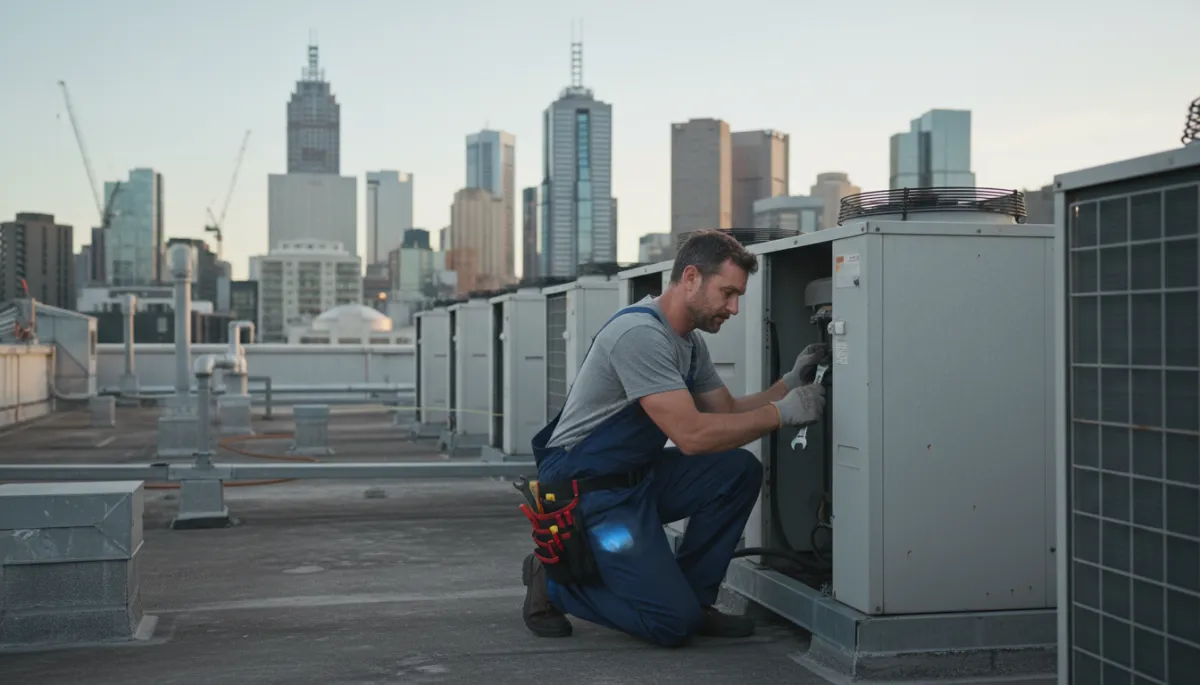
The Maths Behind a Missed Call
Let’s put some real numbers around the cost of missed calls tradies are wearing every week in Melbourne. We’re not talking theory here — this is the quiet leak in the bucket that slowly drains your profit while you’re flat out on the tools.
Take a typical HVAC business as an example. Adjust the numbers for plumbing or electrical if you like, but the story is the same. Say your average job value is $1,200. That might be a split-system install, a decent repair, or a call-out plus parts. Nothing crazy — just an average solid job in Melbourne.
Now imagine you miss five calls per week. That’s one a day. For most owner-operated trade businesses with 2–20 staff, that’s actually on the low side once you factor in driving, being under a house, up a ladder, or stuck on another call with a supplier or inspector. But let’s stay conservative: five missed calls each week.
Out of those five missed calls, maybe two are tyre-kickers, wrong numbers, or someone asking a random question. But three of them are genuine job enquiries — people in your area, ready to spend money, who chose you enough to dial your number first. They’ve already found you on Google, seen your van, or been referred by a mate. They’re warm, and they’re ready to book someone today, if not right now.
Out of those three genuine enquiries, let’s again stay conservative and say only one of them would have turned into a booked job if you’d caught the call or followed up within a few minutes. That’s one job per week quietly slipping away while you’re doing everything you can just to stay on top of the day’s work.
One job per week at $1,200 a pop is $1,200 x 52 weeks = $62,400 a year. That’s not a marketing spend, not a “nice to have” — that’s lost revenue that should have been yours, from people who literally tried to give you money and couldn’t get through. For a lot of Melbourne tradies, that’s the difference between:
- Running one extra ute on the road, or not
- Paying yourself properly, or scraping by on what’s left after everyone else
- Having cash for new gear and growth, or constantly juggling bills and BAS
When you look at the cost of missed calls tradies are absorbing, $62,400 a year isn’t just a number on a spreadsheet. It’s real jobs, real people, and real profit that ends up in a competitor’s bank account because your phone rang out while you were doing the right thing — looking after the customer in front of you.
Why Tradies Miss Calls (And Why It’s Not Their Fault)
If you’re reading this thinking, “Yeah, but I can’t just drop everything and answer every call,” you’re exactly right. That’s the point. This isn’t a discipline problem — it’s a structural problem. The way most trade businesses are set up, there’s nothing sitting between a customer calling and the call ringing out. No safety net. No system. Just you, your mobile, and whatever chaos you’re in at the time.
For most HVAC, plumbing, and electrical contractors in Melbourne, the reality looks like this:
- You’re on the tools all day — under a house, on a roof, in a ceiling, or driving across town — not sitting in an office waiting for the phone to ring.
- Your “office” is your ute and your mobile, and maybe a partner helping with admin after hours.
- You’re juggling quotes, invoices, team management, and emergencies on top of actual billable work.
The problem is there’s no infrastructure sitting between a customer trying to book a job and that job actually landing in your calendar. When a call comes in and you can’t answer, there’s:
- No automated acknowledgement — the caller gets voicemail (if you even have it set up), or just rings out. They have no idea if you’ll ever get back to them.
- No instant response — nothing happens in that crucial first 60–90 seconds when they’re still thinking about you and haven’t hit the next number on Google yet.
- No structured follow-up — maybe you call back at lunch, maybe after work, maybe tomorrow, or maybe you forget because the day turned into a circus.
- No way to capture them before they call someone else — there’s nothing to “hold” that lead while you’re busy doing your actual job.
So when people talk about the missed call tradies Australia problem, it’s not about you needing to “try harder”. You’re already working flat out. It’s about building a simple, reliable system that catches those calls, acknowledges the customer, and keeps the conversation warm until you or your team can jump in properly.
The First-to-Respond Rule
Here’s the brutal truth about how people choose tradies: the first business to respond wins most of the time. Studies across service industries show that the first company to respond to an enquiry wins the job 70%+ of the time. Not the cheapest, not the biggest, not the one with the fanciest website — the fastest.
In trades, especially in Melbourne’s peak seasons, that number is probably even higher. Think about:
- A family in Brunswick with a dead split system in 38-degree heat
- A restaurant in Southbank with a blocked drain an hour before dinner service
- A townhouse in Richmond with half the power out on a Sunday afternoon
These people aren’t calmly comparing five quotes over a week. They’re standing in a hot house, or staring at a blocked toilet, or sitting in the dark. Urgency is everything. They’ll usually ring the first couple of numbers they see on Google and go with whoever gets back to them first with a clear, confident answer like:
“Yep, we can help. Here’s when we can be there. Here’s what it’ll roughly cost. Let’s lock it in.”
That’s why the cost of missed calls tradies face is so high. A missed call isn’t just a minor inconvenience. In that moment, while your phone is buzzing in your pocket, that customer is already lining up the next option. If another business responds first — even with a simple text — they’re in the box seat to win the job, the review, and the relationship.
What Catching a Missed Call Actually Looks Like
Let’s make this practical. What does it actually look like to “catch” a missed call in a small trade business without hiring a full-time receptionist and building a call centre in your garage?
Before: The Call Rings Out and Disappears
Picture this. You’re on a roof in St Kilda, mid-way through an install. Your phone is in your pocket, you’re balancing tools, and you’ve got both hands on the job. Your phone rings. You feel it buzz, glance at your watch, and think, “I’ll call them back in a bit.”
Ten minutes later you’re still on the roof. An hour later you’re driving to the next job. By the time you get a break and scroll through your missed calls, that number is just one of many. You might ring back, but by then there’s a good chance they’ve already booked someone else. From the customer’s point of view, they called, no one answered, so they moved on. Job gone. Revenue gone. No second chance.
After: They Hear from You Within 60 Seconds
Now imagine the same scenario, but with a simple system in place. You still miss the call — you’re human, and you’re busy — but within 60 seconds the caller gets an automated text that sounds like it’s come straight from you:
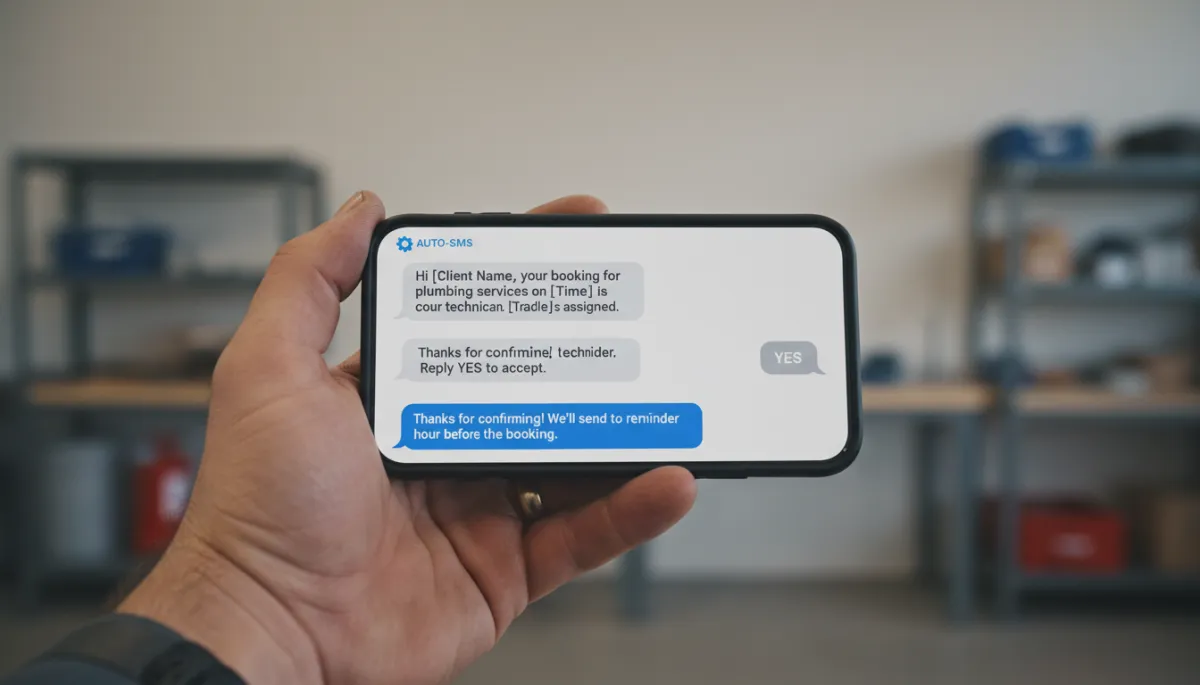
Automated text-back keeps the conversation warm and stops leads drifting to competitors.
Something like: “Hey, it’s Jake from CairnCore Air. Sorry I missed your call — I’m on a job. Shoot me a quick text with what you need and your suburb, and I’ll get back to you shortly.”
Now the customer feels seen. They know you’re real, you’re working, and you care enough to acknowledge them quickly. They reply: “Hi Jake, AC not cooling in a unit in Carlton. Need someone today if possible.” You’ve just turned a cold missed call into a warm text conversation that can lead straight to a booking — even if you’re still on the roof.
From there, a proper system can:
- Ask a couple of quick qualifying questions automatically (location, problem, timing).
- Offer available time windows straight from your calendar.
- Lock in the job and send a confirmation text and email.
Same busy day. Same missed call. Completely different outcome. This is what “catching” a missed call actually looks like in a modern trade business — low-friction, mostly automated, and designed around the reality that you’re not sitting at a desk all day.
The Multiplier Effect of a Missed Call
That $1,200 lost job we talked about earlier? It doesn’t just disappear once. The real cost of missed calls tradies face is what that one lost customer would have turned into over time if you’d actually won them and looked after them properly. This is where it really starts to sting.
Lost Referrals
A good customer doesn’t just give you one job. They tell people. On average, a happy customer might refer 2–3 other jobs over their “lifetime” with you — family, neighbours, workmates, or other business owners. In Melbourne’s tight-knit suburbs, this adds up fast. Miss the original call, and you don’t just lose that job — you lose the network that comes with it.
Lost Repeat Work
Especially in HVAC and electrical, customers don’t just need you once. There’s maintenance, upgrades, additional work, and seasonal servicing. That one $1,200 job could easily turn into $3,000–$5,000 over a few years if you stay in touch and keep showing up. If you never answer the first call, none of that future work ever exists for you — it all lands with your competitor instead.
Lost Google Reviews and Social Proof
Reviews matter. When someone searches “plumber near me” or “HVAC Melbourne” and sees a business with 10 reviews and another with 120, they already know who they’re calling first. Every missed call is also a missed chance to do a great job, send a quick follow-up message, and ask for a 5-star Google review. Over time, that’s the difference between you being the obvious choice on page one, or buried under everyone else who built systems to catch and nurture their leads.
What to Do About It (Without Hiring a $50k+ Receptionist)
Once you see how much missed call tradies Australia are wearing in lost revenue, it’s natural to think, “Maybe I just need a receptionist.” But for most owner-operated businesses with 2–20 staff, a full-time receptionist on $50k+ per year (plus super, plus overheads) just doesn’t stack up — especially when your phone still goes quiet some days and explodes other days. You end up paying for a warm chair, not consistent value.
The real fix isn’t another salary — it’s infrastructure. You need a simple, reliable system that sits between your customer and your calendar, doing the boring but critical work every single time:
- Missed-call text-back — every missed call automatically gets a personalised SMS within seconds, so the customer feels acknowledged and starts a conversation instead of calling the next tradie on Google.
- AI call answering — when you really can’t pick up, an intelligent system can answer, capture details, answer basic questions, and even offer time slots — without sounding like a robot from a call centre in another country.
- Automated follow-up sequences — if someone enquires but doesn’t book straight away, they get a series of polite, on-brand follow-ups by SMS and email that keep you front-of-mind without you lifting a finger.
- Online booking — customers who are ready to lock something in can book directly into your calendar within the rules you set (suburbs, job types, time windows), so you wake up to confirmed jobs, not just voicemails.

A simple system turns yesterday’s missed calls into tomorrow’s confirmed jobs.
This kind of infrastructure doesn’t replace you. It just makes sure that when you’re doing what only you can do — leading the team, solving problems on-site, keeping customers happy — you’re not bleeding leads in the background. Instead, every enquiry gets caught, acknowledged, and moved towards a booking, whether you’re free to answer right now or not.
How CairnCore Fits into the Picture
This is exactly the problem CairnCore Systems is built to solve for Melbourne-based HVAC, plumbing, and electrical contractors. It’s a done-for-you SaaS platform designed specifically for tradies who are serious about growth but don’t want to turn into full-time office managers or tech experts just to stop missing calls.
Instead of duct-taping together five different apps and hoping they talk to each other, CairnCore gives you one integrated system that:
- Catches every missed call with instant text-back and optional AI call answering
- Guides leads from “just called” to “job booked” with minimal back-and-forth
- Plugs straight into your calendar so your days fill up with the right jobs, in the right areas
- Follows up after the job for reviews, referrals, and repeat work — automatically
In other words, it turns the messy, unreliable “hope I see that missed call later” process into a repeatable system that protects your marketing spend, your reputation, and your future revenue. When you’re looking at the how much do missed calls cost trade business question, the right infrastructure doesn’t just pay for itself — it often pays for an extra van and another tradie on the road.
Closing the Gap: Don’t Let Another Missed Call Walk
If you’re an owner-operator in Melbourne with a small team, you already know how hard you work for every lead — the website, the SEO, the van signage, the word of mouth. Letting those hard-won calls ring out is like pouring fuel into the ute and then drilling a hole in the tank. You still move, but you burn through far more than you need to, and you never quite get ahead.
You don’t need to become a call centre. You don’t need to sit by the phone. You just need a system that respects your time, respects your customers, and protects every opportunity that comes your way — even when you’re flat out on the tools.
CairnCore gives Australian trade contractors the system that catches every lead — even when you can’t answer the phone.
